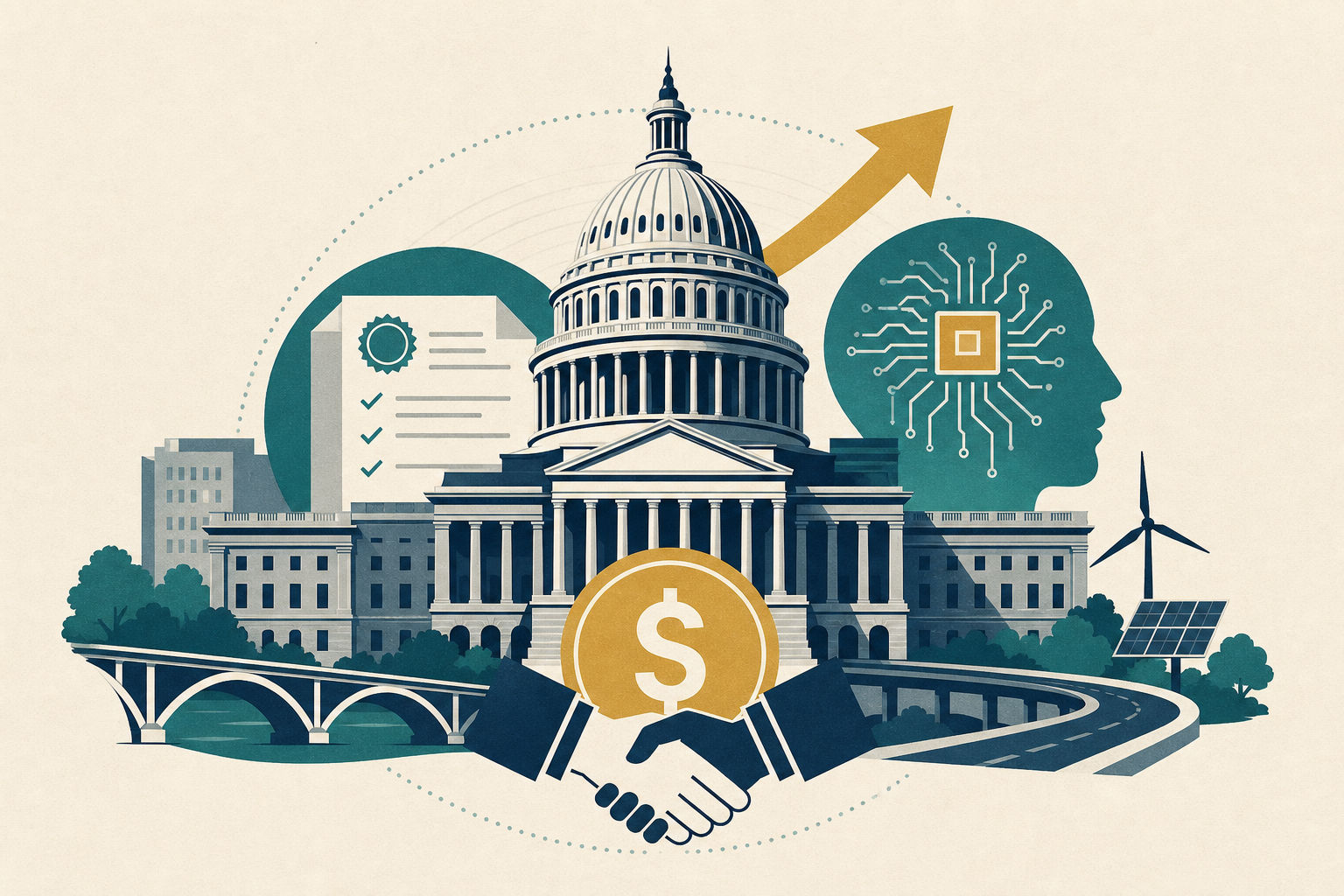
The OneGov initiative, a key program under the General Services Administration (GSA), has reached a significant milestone, achieving over $1.6 billion in savings for the federal government. This revelation underscores the potential of centralized procurement strategies in maximizing resource efficiency within federal agencies. The GSA's efforts to extend existing OneGov deals and broker new ones are indicative of the program's success and the growing demand for streamlined services in federal procurement.
According to Government Executive, the GSA is actively working to extend some of its current agreements under the OneGov program, while also seeking opportunities to negotiate new contracts. This proactive approach is part of a broader effort to enhance the efficiency and effectiveness of government procurement processes, potentially setting a new standard for how public sector agencies manage contracts.
The Role of AI in Federal Contracting
As the GSA continues to optimize its procurement strategies, federal agencies are increasingly considering the integration of artificial intelligence (AI) into contracting processes. AI technologies offer the potential to automate routine tasks, thereby reducing the time and resources required for contract management. This could lead to significant improvements in the speed and accuracy of procurement decisions, ultimately benefiting both government agencies and the contractors they work with.
The potential for AI to transform federal procurement is immense. By leveraging machine learning algorithms, agencies can analyze vast amounts of data to identify trends and make more informed decisions about contract awards. Furthermore, AI can assist in compliance monitoring, ensuring that contracts meet legal and regulatory requirements.
Implications for Government and Industry
The shift towards AI-enabled procurement processes has significant implications for both government agencies and private contractors. For agencies, the adoption of AI could lead to more efficient use of taxpayer dollars, as procurement processes become more streamlined and less prone to human error. In turn, this could enhance public trust in government spending and increase transparency in how contracts are awarded and managed.
For contractors, the integration of AI into federal procurement processes presents both challenges and opportunities. Companies that invest in AI technologies and adapt to new procurement methods may gain a competitive advantage in securing government contracts. However, those that fail to keep pace with technological advancements risk being left behind as the federal procurement landscape evolves.
Policy and Regulatory Considerations
The introduction of AI into federal procurement processes also raises important policy and regulatory considerations. Policymakers must address issues related to data privacy, ethical use of AI, and the potential for bias in AI algorithms. Ensuring that AI technologies are used responsibly and equitably will be critical to gaining public trust and maximizing the benefits of AI in government operations.
Moreover, regulatory frameworks will need to evolve to accommodate the unique challenges posed by AI in procurement. This includes updating existing guidelines and standards to reflect the capabilities and limitations of AI technologies, as well as establishing new oversight mechanisms to monitor AI-driven procurement activities.
Conclusion
The OneGov initiative's success in achieving substantial cost savings highlights the importance of innovative procurement strategies in the public sector. As federal agencies explore the potential of AI in contracting, they must navigate a complex landscape of policy, regulatory, and technological challenges. However, with careful planning and strategic investment, the integration of AI into federal procurement could usher in a new era of efficiency and effectiveness in government operations.