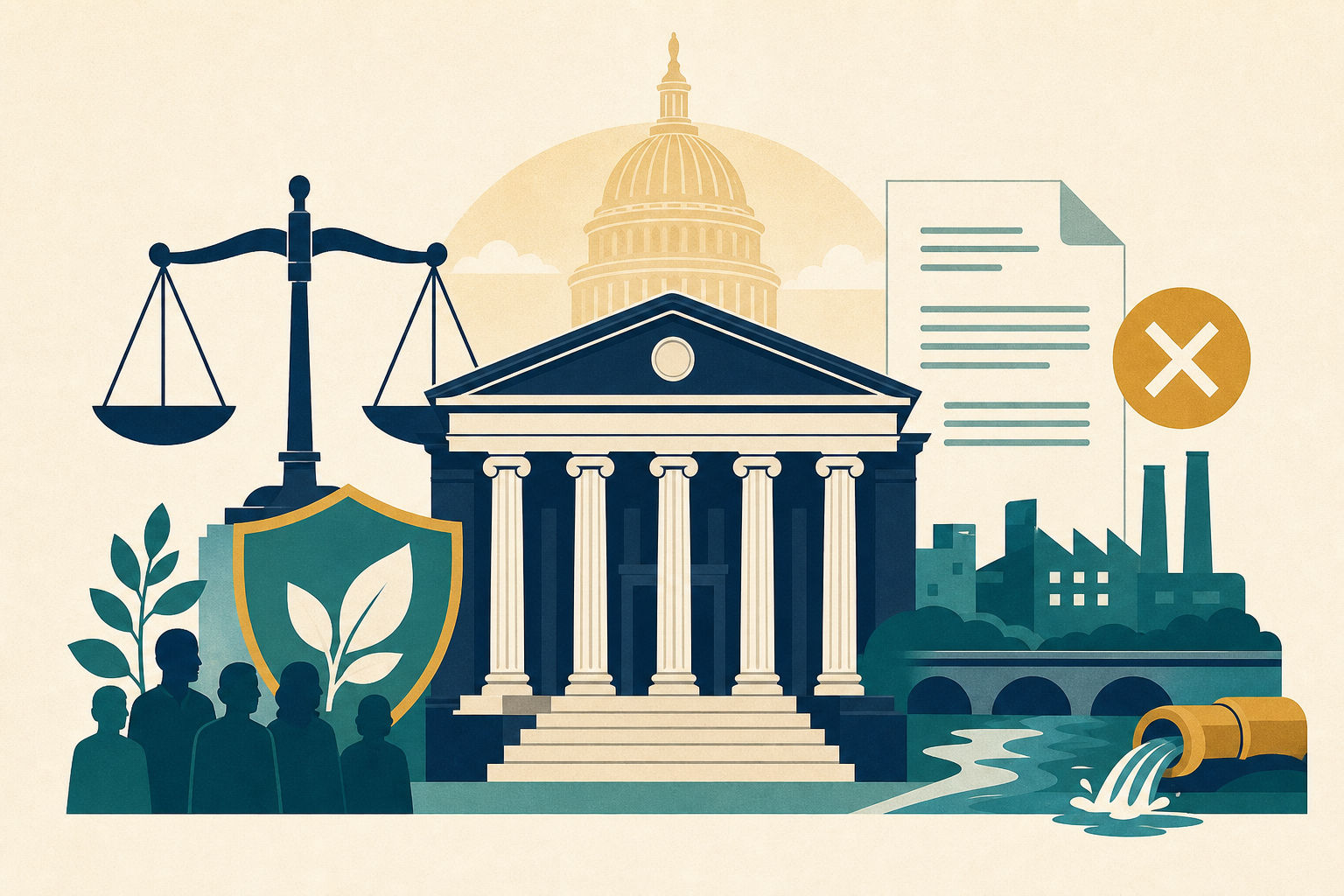
The American Federation of Government Employees (AFGE) has taken legal action against the Environmental Protection Agency (EPA) following the termination of a significant contract. The union claims that the EPA's leadership is following directives from a presidential executive order aimed at limiting federal workers' collective bargaining rights. According to Government Executive, this move is seen as a way to easily discipline employees who have openly criticized the agency's Administrator, Lee Zeldin.
Background: Executive Orders and Union Rights
The controversy stems from an executive order issued during President Trump's administration. This order sought to reduce the power of federal unions by removing certain bargaining rights. These actions have been contentious, sparking debates about the balance between government efficiency and employee rights.
The AFGE argues that the executive order in question has been used as a tool to quash dissent within the agency. By terminating contracts, the EPA can ostensibly discipline employees without the usual due process afforded under collective bargaining agreements. This has raised alarms among federal employees and union leaders who see it as a violation of workers' rights.
Implications for Federal Employees
For the workforce at the EPA, the implications are significant. Without the protections provided by union contracts, employees may face disciplinary actions that could affect their job security and working conditions. The union's lawsuit aims to restore these rights and ensure that all disciplinary actions are conducted fairly and transparently.
The broader federal workforce is watching closely, as this case could set a precedent for how executive orders are applied across federal agencies. A ruling in favor of the union could reinforce the importance of collective bargaining rights, while a decision supporting the EPA's actions might embolden other agencies to follow suit.
Policy and Regulatory Context
The lawsuit highlights ongoing tensions between federal agencies and unions representing government employees. It also underscores the challenges of navigating executive actions that can have sweeping implications for labor relations. According to Government Executive, the legal battle is not just about the EPA but about the fundamental rights of federal employees to organize and bargain collectively.
Legal experts suggest that the outcome could influence future executive orders and their implementation. If the court sides with the AFGE, it may prompt a reevaluation of similar policies across other federal agencies, potentially leading to a restoration of union rights that have been curtailed.
The Road Ahead
As the case proceeds, both sides are preparing for a potentially lengthy litigation process. The AFGE is committed to defending the rights of its members, emphasizing the importance of fair labor practices. Meanwhile, the EPA, in adhering to the executive order, maintains that its actions are lawful and necessary for maintaining agency efficiency.
The outcome of this lawsuit is pivotal not just for the EPA but for the federal workforce as a whole. It raises critical questions about the balance of power between government administration and employee representation, as well as the role of executive orders in shaping labor policy.
Conclusion: A Defining Moment for Federal Labor Relations
This lawsuit represents a pivotal moment in federal labor relations, highlighting the complex interplay between executive policy and employee rights. As federal employees and policy-watchers await the court's decision, the case serves as a reminder of the essential role that collective bargaining plays in protecting workers' rights within government institutions. The resolution of this case will likely have lasting implications for labor relations and federal workforce policies moving forward.