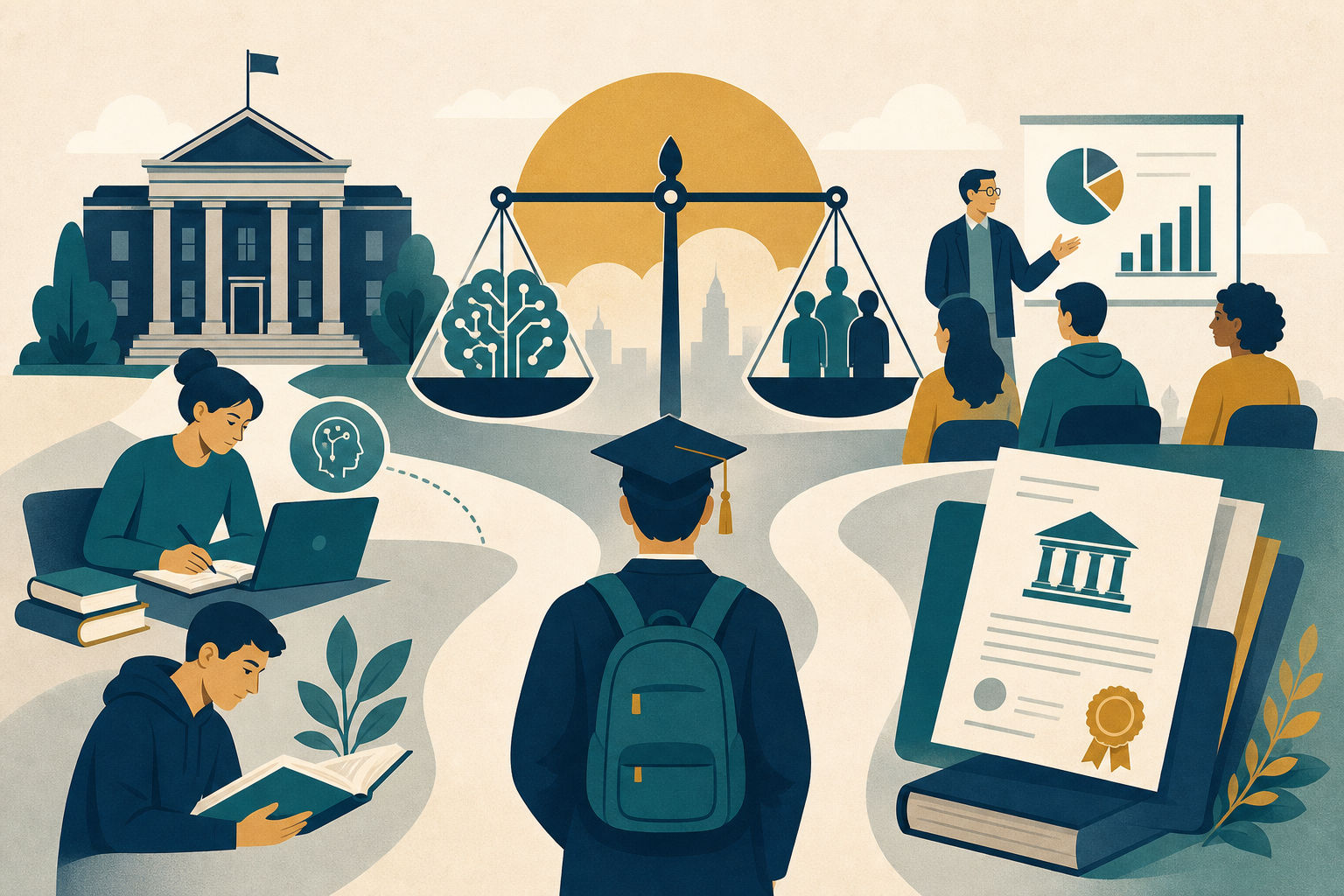
Recent graduates are facing a challenging job market, with unemployment rates higher for those with new degrees compared to the overall workforce. According to NPR, this has led many young professionals to identify artificial intelligence (AI) as a significant barrier to securing employment. However, economists caution against jumping to conclusions, suggesting that the situation may be more complex than it appears.
Understanding the Unemployment Data
The New York Federal Reserve reports that young adults with new degrees are experiencing higher unemployment rates, raising concerns about the effectiveness of higher education in preparing students for the workforce. This trend has sparked debate about the factors contributing to these statistics. While some recent graduates point to AI and automation as culprits, experts argue that other variables may be at play, including economic factors and shifts in industry demands.
The Role of AI in the Workforce
AI has been a transformative force in many industries, offering efficiencies and innovations that were once unimaginable. However, its impact on employment is a double-edged sword. On one hand, AI can create new job opportunities and improve productivity. On the other, it can displace certain roles, particularly those involving repetitive tasks that machines can perform more efficiently.
For recent graduates, the fear is that AI may be making entry-level positions scarce, as employers seek candidates with skills that AI cannot easily replicate. This concern is valid in industries where automation is rapidly advancing, but it does not account for the entire job market landscape.
Economists' Perspective on AI and Employment
While the perception among many recent graduates is that AI is a primary barrier to employment, economists suggest a more nuanced view. The job market is influenced by a multitude of factors, including economic cycles, globalization, and market saturation in certain fields. AI is just one element in this complex equation.
According to NPR, some economists argue that the skills mismatch between graduates and available jobs is a more significant issue than AI. Many industries are looking for candidates with specialized skills that new graduates may not possess immediately upon entering the job market.
Preparing Graduates for an AI-Driven Future
To address these challenges, higher education institutions are re-evaluating their curricula to better prepare students for an AI-influenced job market. This includes integrating more technology and data analytics courses into traditional degree programs and fostering skills like critical thinking and adaptability that are less susceptible to automation.
Additionally, career services are becoming more integral to the university experience, offering guidance on navigating the evolving job landscape and highlighting the importance of lifelong learning.
Conclusion: A Balanced View
The debate over AI's role in the employment challenges facing recent graduates underscores the need for a balanced approach. While AI presents certain obstacles, it also offers opportunities for those who are prepared to adapt. Educational institutions, employers, and policymakers must work together to ensure that new graduates are equipped with the skills necessary to thrive in an ever-evolving job market.
In summary, while AI is a factor in the job market dynamics for recent grads, it is not the sole cause of their employment challenges. A comprehensive strategy that embraces technological advancements while addressing skills gaps is essential for improving job prospects for young professionals.