Where Hiring Is Moving Next
As traditional job descriptions vanish, companies are abandoning static credentials for dynamic skills mapping and cognitive elasticity.
The job description, that rigid, bullet-pointed artifact of the 20th century, is finally resting in peace. In August 2026, no serious organization is hunting for a synergy-driven self-starter with five years of Excel experience. Instead, corporate hiring has evolved into an exercise that resembles algorithmic matchmaking crossed with high-stakes supply-chain logistics. Welcome to the era of precision labor.
Just three years ago, the corporate zeitgeist was gripped by panic. Executives were paralyzed by the twin specters of generative AI annihilating white-collar work and a shrinking demographic pipeline strangling blue-collar trades. Neither apocalypse arrived on schedule. Instead, a peculiar mutation occurred in the American workforce. As algorithms automated the routine, human hiring pivoted sharply toward the mercurial. We are no longer hiring for what a candidate already knows; we are hiring for how rapidly they can discard the obsolete and integrate the unprecedented.
The traditional resume is a purely historical document, and the modern enterprise cannot afford to hire for history, observes Dr. Aris Thorne, a labor economist at the Brookings Institution. We are now hiring for trajectory and cognitive elasticity. Thorne points out that the most competitive corporations have largely abandoned static credentialing in favor of dynamic skills mapping. In 2026, the vital question isn't whether a candidate possesses a master's degree in marketing. The question is whether their analytical elasticity allows them to pilot three distinct AI agents while simultaneously negotiating a sudden, real-world supply-chain bottleneck.
Consider the healthcare and logistics sectors—arguably the twin canaries in the coal mine for America's labor shifts. At global freight conglomerate Omnis, Chief Human Resources Officer Elena Rostova recently dismantled her entire traditional recruiting apparatus. She replaced it with what she terms a talent deployment nerve center. According to Rostova, the shift was a matter of survival. We don't have job openings anymore, she notes with a dry pragmatism. We have capability deficits. When Omnis needs to optimize a new drone-delivery corridor, they no longer spend six months hunting for a monolithic Logistics Director. Instead, they lease a cluster of specific skills—spatial analytics, autonomous risk mitigation, and localized regulatory fluency—often spread across two fractional contractors and one internal cultural lead.
This capability-first approach points directly to the next great migration in hiring: the institutionalization of the fluid workforce. The gig economy has finally grown up, trading in its ride-share steering wheel for a seat at the executive table. Forward-thinking companies are increasingly maintaining a remarkably lean core of cultural custodians—the leaders who define brand, ethics, and overarching strategy—while plugging in highly specialized, transient talent for execution. It is the workforce equivalent of cloud computing, allowing organizations to scale human capital up, down, or sideways with unprecedented velocity.
Of course, this decentralized utopia is not without its unique brand of friction. Navigating a corporate environment where your project manager is a fractional consultant operating out of Lisbon, while your primary data analyst is a predictive algorithm named Steve, requires a distinct psychological fortitude. The highly coveted soft skills of the previous decade—basic empathy, communication, and teamwork—have been ruthlessly upgraded into what workforce professionals now call complex integration skills. It turns out that convincing human beings to collaborate seamlessly with synthetic intelligences requires an extraordinary amount of raw emotional intelligence. Educators and healthcare administrators, long plagued by burnout, are finding that training staff for this human-machine synthesis is now their primary retention strategy.
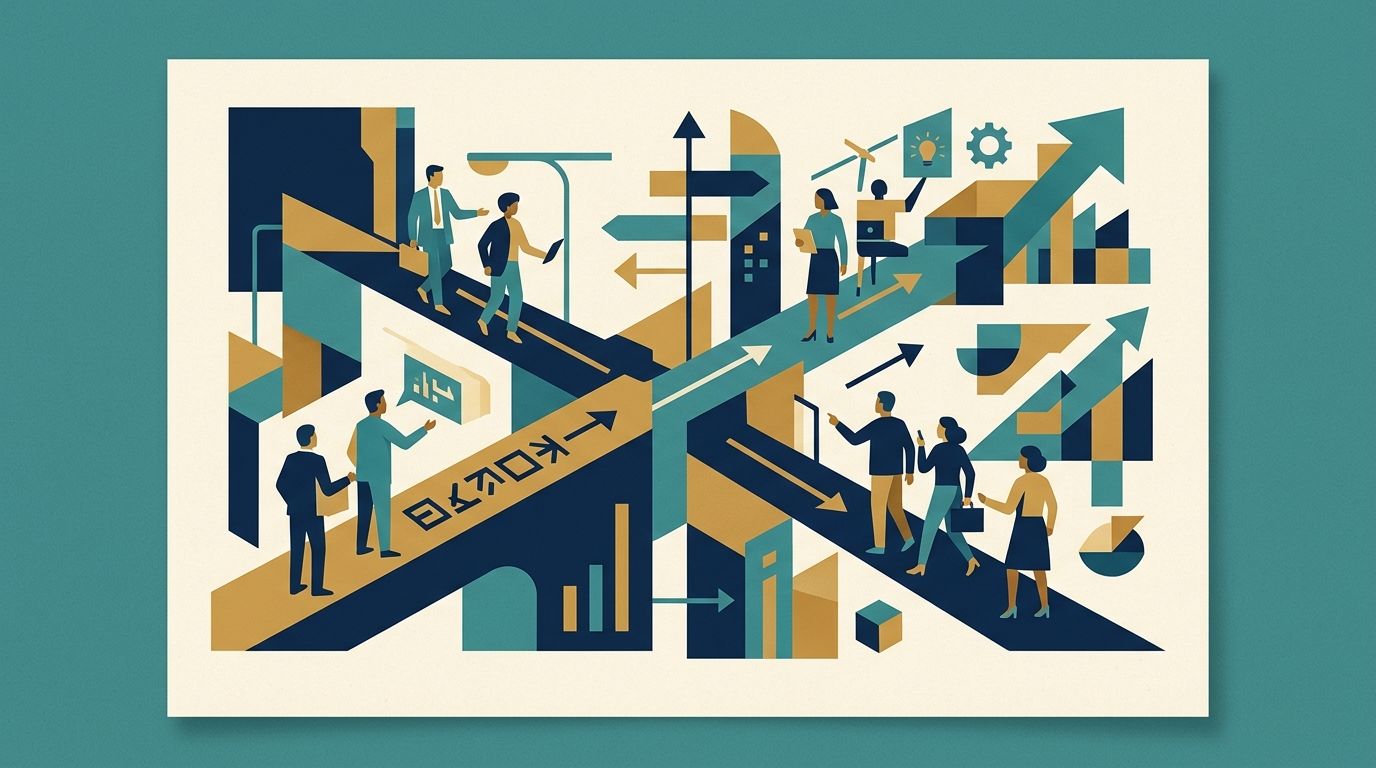
So, where does hiring move next as America stands at this demographic and technological crossroads? It moves definitively away from the pipeline and toward the grid. The linear, single-track career path is being swiftly replaced by a multidirectional web of dynamic deployments, where talent is continuously routed to the point of highest operational friction. For executives, policy leaders, and educators, the new mandate is brutally clear: stop training and recruiting workers for static slots that will not exist by the time the ink dries on their offer letters. Train them to be the current that powers the grid. The future of the American workforce belongs not to those who can hold down a job, but to those who can master the flow.